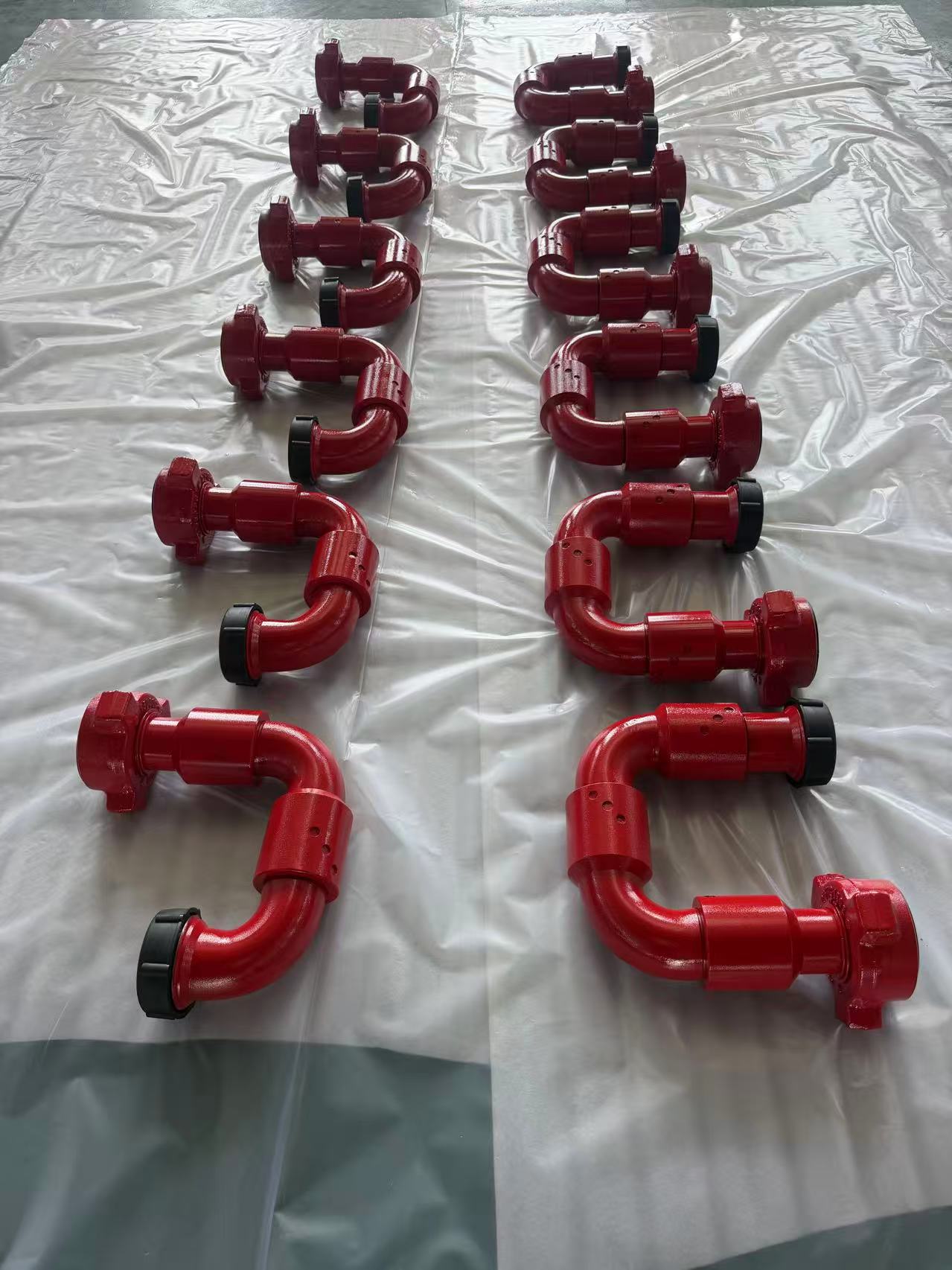
A complete treating-iron package is a matched set of parts that forms a full high-pressure line, plus the spares and checks that keep that line usable on location. At its core it includes pup joints to set lengths, plug valves to control flow, and swivel joints to change direction, all in the same size, union figure, and working pressure. A package is only complete when every piece has been checked against the same line list, and the spares that would be needed for a mid-job swap are already on the truck.
Start with the line, not the shopping list
It is tempting to order a treating-iron package by counting pieces: so many pup joints, so many valves, so many swivels. That count is only useful after the line itself is understood. A treating line runs from the pumping equipment to the wellhead, and its layout decides what the package must contain: how far the line must reach, where it must turn, where flow must be stopped or diverted, and where a spare would have to go if a piece needed swapping mid-job.
That is why a good package starts with a simple line list, written down before anything is ordered. The list names each run in the line, the length it must cover, the direction changes it must make, and the control points where a valve is needed. Once that list exists, choosing pieces becomes a matching exercise rather than a guessing game, and gaps show up on paper, where they are cheap to fix, instead of on location, where they are not.
The core pieces of a treating-iron package
- Pup joints: short straight sections that set the length of a run and bridge the gaps between other pieces. A package usually needs several lengths, because a line rarely works out to one standard length. Sterling stocks 2-inch FIG 1502 pup joints in 4 ft, 6 ft, and 10 ft lengths (T000864, T000866, and T000855), and mixing lengths is the normal way to reach an exact layout.
- Plug valves: the control points of the line, used to start, stop, or divert flow at a chosen point. A package needs a valve everywhere the plan calls for isolation or diversion, and a spare valve is one of the most useful spares a crew can carry. Sterling stocks the 2-inch FIG 1502 plug valve T000856.
- Swivel joints: the pieces that let a line change direction without being broken apart. They matter wherever the line must turn around equipment, adjust during rig-up, or absorb movement once it is in place. A package should include the styles the layout calls for, not just any swivel that happens to be in the yard. Sterling stocks Style 10 and Style 50 swivel joints (T000620 and T000693).
- Unions at every joint: each connection in the line needs a mating union of the same figure and orientation. A package that counts pieces but forgets a mating union is not complete, because a single unmatched union can hold up a whole rig-up.
- Restraints and supports: the hardware that keeps a pressurized line where it belongs. Restraints, whip checks, and supports belong on the package list from the start, not as an afterthought found on location.
The pieces people forget
The most common gaps in a treating-iron package are not the big pieces. They are the small ones: end protectors and caps for threads and sealing surfaces during transport, a spare union or two for the connections most likely to be swapped, and the packing or seal spares for the swivel joints in service. None of these decide the layout, but any one of them can stall a job when it is missing.
Spares deserve their own line on the package list, tagged by the line they fit. A spare valve or pup joint staged beside the line is only a spare for that line if its size, union figure, and working pressure match that line. Tagging spares to their line, and keeping the stamp list with the layout, means the next crew does not have to guess under time pressure. The same habit applies in the yard: pieces stored with their protectors on, their markings visible, and their line assignment noted are pieces that can be loaded without a second trip.
How to check a package before it ships
Before a package leaves the yard, run it against the line list piece by piece. Check that every pup joint, plug valve, and swivel joint matches the line in size, union figure, and working pressure, and that every end faces the direction the layout requires. Remember that the lowest-rated piece in an assembled line sets the limit for the whole line, so a single piece below the planned service is a reason to stop, not a detail to note and carry on.
Then check the package as a set, not just as a pile of correct pieces. Count the mating unions, confirm the restraints and supports are included, confirm the spares are tagged to the right line, and confirm the protectors are on every piece that will travel. A short written check, kept with the shipment, turns that review into a record the receiving crew can repeat on location. If a marking is worn or unreadable, or a piece cannot be matched to its drawing number with confidence, keep it out of the package until it is verified. A package with a gap that is known is far easier to fix than a package with a gap discovered during rig-up.
Where Sterling can help
Sterling Wellhead stocks new 2-inch FIG 1502, 10,000 PSI flow iron in Jourdanton, Texas 78026, including the T000856 plug valve, 4 ft, 6 ft, and 10 ft pup joints (T000864, T000866, T000855), and Style 10 and Style 50 swivel joints (T000620, T000693). If you are putting together a treating-iron package, send the line list, the lengths and direction changes it calls for, the quantities you need, and the drawing numbers for the pieces you already own, and our team will confirm the configuration by drawing number. Sterling is RFQ-only: contact sales@sterlingwellhead.com or +1 (512) 373-0384.
Frequently asked questions
Can a package mix pieces from different suppliers?+
Yes, as long as every piece matches the same line in size, union figure, orientation, and working pressure, and each piece can be verified by its marking and drawing number. Mixing suppliers is common; mixing figures, pressures, or orientations is not acceptable, even when the pieces look alike.
How many spares should a package include?+
There is no single number that fits every job, because it depends on the length of the line, how many control points it has, and how far the location is from the yard. As a planning starting point, crews commonly include a spare valve, a spare pup joint in a useful length, and a spare swivel joint tagged to the line, plus the protectors and mating unions those spares would need.
What should I send a supplier for a package quote?+
Send the line list with lengths and direction changes, the size and union figure, the quantities of each piece, the drawing numbers of anything you already own, the required-on-site date, and the delivery location. That is enough for a supplier to confirm the configuration by drawing number and to flag any gap before the package ships.