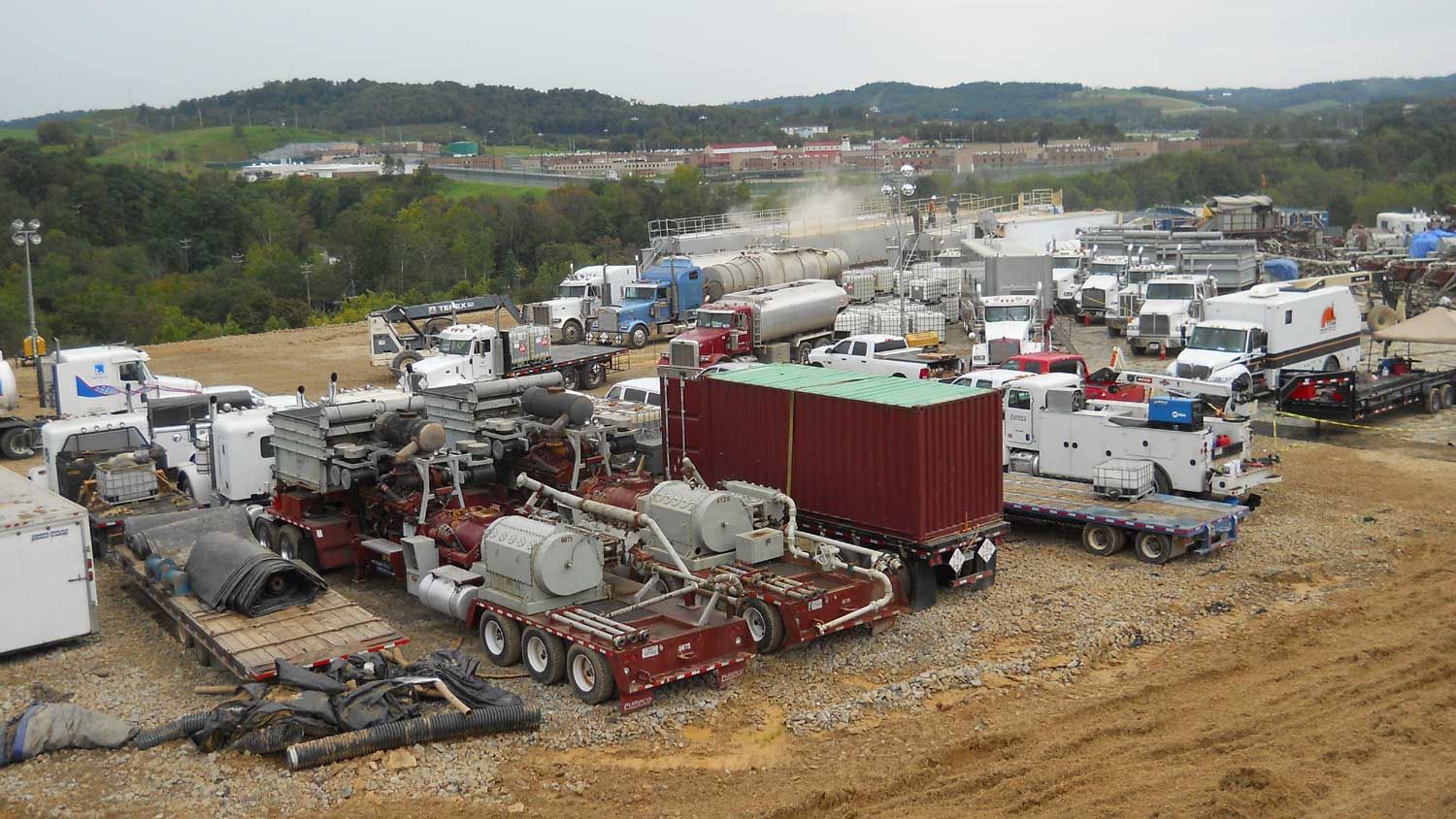
The Permian Basin and the Eagle Ford use the same treating iron: 2-inch FIG 1502, 10,000 PSI lines built from pup joints, plug valves, and swivel joints. What differs is the operating picture around that iron — how far it has to travel, how spreads are staged, and how much buffer a crew builds into spares and timing. The iron does not change from basin to basin; the logistics and planning around it do.
Two basins, one kind of iron
The Permian Basin sits in West Texas and southeastern New Mexico, and the Eagle Ford runs across South Texas. Both are shale plays where horizontal wells are completed with high-pressure pumping and then flowed back, so both run the same kind of surface equipment: pumps, manifolds, and treating lines rigged up stage by stage.
That shared work is why the iron is the same in both places. A treating line in either basin is built from pup joints to set lengths, plug valves to control flow, and swivel joints to change direction, all matched in size, union figure, and working pressure. A buyer who knows the line list for one basin already knows the line list for the other — the differences show up in how the iron gets to location and how it is staged once it is there.
Distance is the first difference
- Yard proximity: Sterling's stock sits in Jourdanton, Texas, in South Texas, close to Eagle Ford locations. The same stock can serve Permian work, but the haul is longer, so delivery timing and the required-on-site date deserve a line of their own in the RFQ.
- Spares travel with the job: the farther a location is from the yard, the more a missing spare costs. A spare valve, a spare pup joint in a useful length, and the mating unions they need should be on the truck before it leaves, not on a list for later.
- Delivery timing: confirm the delivery date and the delivery location when the quote is issued, not after the iron is loaded. A job that starts Monday cannot wait for iron that arrives Tuesday.
- Return trips: iron that comes back from a distant job should be drained, cleaned, and checked before it is stacked, because the next call for it may come before there is time for a full yard pass.
- One call instead of several: sending the full line list, quantities, drawing numbers, delivery location, and required-on-site date in a single RFQ lets the supplier confirm the configuration and the timing together.
How the operating picture differs
The Permian covers a much larger and more spread-out area than the Eagle Ford, so crews there often travel farther between locations, and the distance from the nearest supply yard to the job is often longer. That spread puts more weight on planning: a line list that is complete before the truck leaves, spares that are tagged to the line they fit, and a delivery date confirmed in writing.
Eagle Ford work is generally closer to South Texas supply points, which shortens the haul and makes a quick top-up or a replacement piece easier to arrange. That is an advantage, not an excuse to skip the same planning. A short haul still fails when the line list is incomplete, and a replacement still has to match the line in size, figure, orientation, and working pressure — closeness does not make a mismatch acceptable.
Conditions on location vary in both basins, and neither one is a gentle environment for iron. Dust, mud after rain, and wind work on threads, sealing faces, and supports wherever the spread is rigged up, and the inspection habits are the same in both places: read the stamps, cycle the valves, check swivel rotation, and confirm restraints and whip checks before the line is pressurized. The basin changes the drive, not the checklist.
Planning iron for either basin
Start every job the same way, in either basin: write the line list first. Name each run, the length it must cover, the direction changes it must make, and the control points where a valve is needed. Then match every piece to that list by size, union figure, working pressure, and orientation, and confirm each piece by its drawing or part number. The lowest-rated piece in an assembled line sets the limit for the whole line, so a single piece below the planned service is a reason to stop.
Then build in the buffer the basin calls for. For a distant Permian location, that usually means more spares on the truck, protectors fitted for a longer road trip, and a delivery date confirmed early enough to absorb a delay. For a closer Eagle Ford location, the buffer is smaller, but the same pieces still belong on the list. In both cases, keep the stamp list and the inspection record with the shipment, so the receiving crew can repeat the check on location instead of starting from memory.
Where Sterling can help
Sterling Wellhead stocks new 2-inch FIG 1502, 10,000 PSI flow iron in Jourdanton, Texas 78026, including the T000856 plug valve, 4 ft, 6 ft, and 10 ft pup joints (T000864, T000866, T000855), and Style 10 and Style 50 swivel joints (T000620, T000693). Whether the job is in the Permian or the Eagle Ford, send the line list, the quantities and drawing numbers, the delivery location, and the required-on-site date, and our team will confirm the configuration by drawing number. Sterling is RFQ-only: contact sales@sterlingwellhead.com or +1 (512) 373-0384.
Frequently asked questions
Is the flow iron different between the Permian Basin and the Eagle Ford?+
No. Both basins use the same 2-inch FIG 1502, 10,000 PSI treating iron, built from the same pup joints, plug valves, and swivel joints. What differs is the operating picture: haul distance, staging, and how much buffer to build into spares and timing.
Can Sterling supply iron for a Permian Basin job?+
Yes. Sterling stocks new 2-inch FIG 1502 flow iron in Jourdanton, Texas 78026. Send the line list, quantities, drawing numbers, delivery location, and required-on-site date with your RFQ, and our team will confirm the configuration and timing by drawing number.
What should an RFQ include for a job in either basin?+
Item type, quantity, drawing or part number, nominal size, union figure, working pressure, end orientation, length or style, the delivery location, and the required-on-site date. The delivery location and date matter more the farther the job is from the yard.