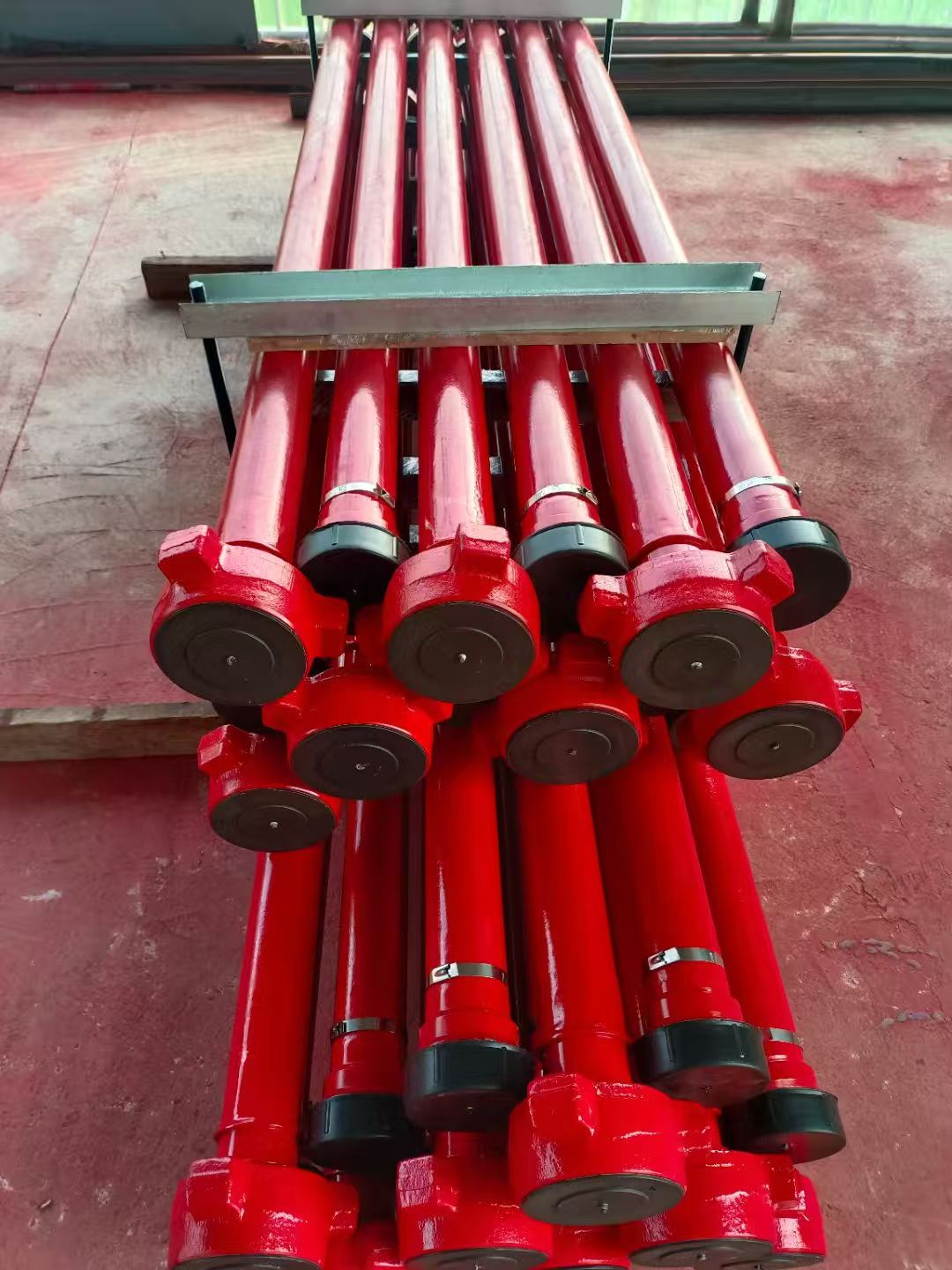
Start with verifiable facts, not the seller's label: confirm the stamped union figure, size, and working pressure on every piece, then inspect union threads and sealing surfaces, check pup joints and swivels for washout and wear, and ask for pressure test records. Used iron can be a solid value when its history and condition are documented; when any of those answers are missing, new iron with known traceability is usually the safer choice.
Start with what 'used' really means
"Used" covers a wide range. At one end is surplus-new iron: components manufactured, finished, and stored but never run. At the other is iron pulled after years of pumping abrasive fluid at high pressure, with threads, sealing surfaces, and wall sections worn by service. Most used inventory sits somewhere between the two. The label on a listing tells you little; what matters is what each piece has actually been through and what you can verify.
Treat every used lot as a set of individual components, not a matched package. A bundle of pup joints may look uniform, but each joint has its own history. Evaluating piece by piece is slower, but it is the only way to catch the one joint or valve that does not belong.
What to check on every piece
- Union threads and sealing surfaces: look for stripped, rolled, or crossed threads and for sealing faces that are pitted, scored, or unevenly worn. These are the make-up faces the line depends on, and damage there is hard to repair reliably.
- Stamped markings: confirm the union figure, nominal size, and working pressure are legible and consistent across the lot. Markings are your link to the component's rated service; if a piece cannot be identified, treat it as unverified.
- Pup joints: check for washout, corrosion pits, and thinning near the ends where erosion concentrates. Measure wall thickness where you can; a clean outside appearance says nothing about the inside.
- Plug valves: cycle the valve through its full range and confirm the handle moves smoothly with a positive stop. Check the grease fittings for serviceability and watch for leakage past the seats as a sign of internal wear.
- Swivel joints: confirm the joint rotates through its intended range without binding, and inspect around the packing area for weep, scoring, or contamination. Worn packing is a warning that service intervals were skipped.
- Completeness: verify end protectors, caps, and plugs are present for storage and transport. Missing protection lets threads and sealing faces take damage before the iron ever sees a job.
The questions that separate good used iron from trouble
Ask why the iron was retired. Iron taken out because a program ended or equipment was upgraded is different from iron pulled after a failure. Ask how many wells or stages it ran, what fluid it carried, and whether it was ever over-pressured or repaired. Straight answers here are a good sign; vague answers are data too.
Ask for documentation. Pressure test records, inspection reports, and any recertification paperwork turn a seller's description into something you can act on. Confirm what standard the testing followed and how recently it was done; a test from years ago describes years-ago iron, not the condition you are buying.
Finally, settle the inspection terms before money moves. Can you inspect before purchase? Is the lot sold as-is, or does the seller stand behind the condition described? Base the agreement on the pieces you inspected, not on a stock photo.
When new iron is the simpler answer
New iron answers every one of those questions by default: known manufacturing source, legible markings, matched sets built to the same specification, and test documentation from the start. For critical-path components, for jobs where downtime is expensive, or when the service history of used iron cannot be documented, new iron removes a layer of risk that no discount fully offsets.
That does not make used iron always wrong. For spare lines, lower-demand service, or situations where you can inspect thoroughly and test before the job, well-documented used iron can be a sensible choice. The decision is not new versus used as an ideology; it is verified versus unverified, component by component.
Where Sterling can help
Sterling Wellhead stocks new 2-inch FIG 1502, 10,000 PSI flow iron in Jourdanton, Texas 78026: the T000856 plug valve, 4 ft, 6 ft, and 10 ft pup joints (T000864, T000866, T000855), and Style 10 and Style 50 swivel joints (T000620, T000693). Every piece ships with known specifications you can verify by drawing number, so the evaluation questions above have ready answers. Sterling is RFQ-only: contact sales@sterlingwellhead.com or +1 (512) 373-0384 with your required lengths, styles, and quantities.
Frequently asked questions
Is used flow iron safe to put back into service?+
It can be, if each component's figure, size, and working pressure are verified, the threads and sealing surfaces are sound, and pressure test records support the intended service. Used iron without verifiable history should be treated as unknown, not as a bargain.
What paperwork should I ask for when buying used iron?+
At minimum: the service or removal history, the standard and date of the most recent pressure test, inspection reports with measured results, and any recertification documents. Ask how recently the testing was done relative to the condition you are buying.
Does a low price on used iron say anything about its condition?+
Only that the seller wants it moved. Price is not a condition indicator. Base the decision on inspection and documentation; when those cannot be completed, new iron with known traceability is usually the lower-risk choice.