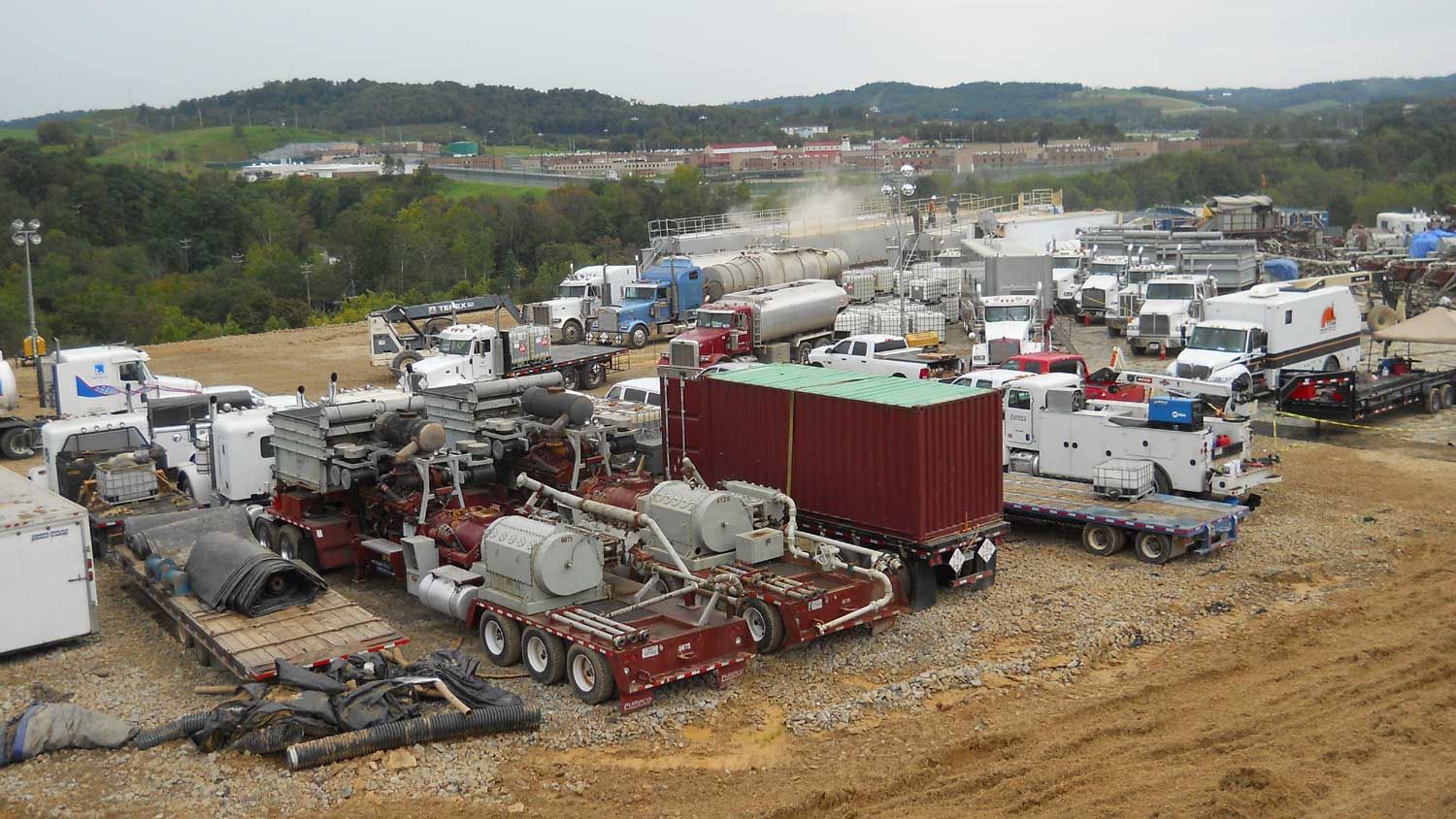
The Eagle Ford is a South Texas shale play where horizontal wells are completed with high-pressure pumping and then flowed back, so demand for treating iron follows the pace of completions, workovers, and flowback work rather than drilling alone. For buyers, that means planning around the full spread: pup joints, plug valves, and swivel joints in matching 2-inch FIG 1502, 10,000 PSI configurations, plus spares close to the job. Stock held in South Texas shortens the distance between a call for iron and a rig-up.
The Eagle Ford in South Texas: a quick orientation
The Eagle Ford is a shale formation that runs across South Texas, and it takes its name from the Eagle Ford community in the region. Wells here are typically drilled vertically to the shale and then steered horizontally through it, so a single well can contact a long stretch of rock from one surface location. That horizontal design is the reason completions in the play lean so heavily on surface treating equipment: the rock must be stimulated along the lateral before it will produce.
For a flow iron buyer, the geography matters as much as the geology. The play sits in the supplier's own backyard for a Jourdanton stock point, and the roads, yards, and service bases that support South Texas work are built around moving iron to locations that are often remote, spread out, and on tight schedules. A supplier that already holds stock in the region is starting from a different position than one shipping across the country for every order.
What the work looks like, stage by stage
Work in a shale play moves through recognizable phases, and each one asks something different of surface iron. During drilling, the focus is on the rig and the wellbore; the heavy surface treating line is not yet the center of attention. That changes at completion, when pumps, manifolds, and treating lines are rigged up to pump fluid and proppant down the well at high pressure, stage by stage along the lateral.
After stimulation, the well enters flowback, when fluid returns to surface and must be routed, measured, and handled safely through flowback iron. Later in a well's life, workover and recompletion jobs may call for treating iron again, sometimes on a smaller spread and a shorter schedule than the original completion. A buyer who only thinks about the first frac misses the repeat demand that follows a well through its life.
Why shale work drives demand for treating iron
- Completions are iron-intensive: a frac spread assembles pumps, a manifold, a main treating line, and the wellhead connection from pup joints, plug valves, and swivel joints, all matched by size, union figure, and pressure rating.
- Layouts change from well to well: pad spacing, equipment spotting, and ground conditions shift, so crews need a mix of pup joint lengths, such as 4 ft, 6 ft, and 10 ft, to close each layout without forcing a connection.
- Flowback adds a second demand stream: flowback spreads need their own iron, routed and restrained for fluid returning under pressure, and they often run on a different schedule from the frac crew.
- Turnaround is fast: when a stage or a job moves to the next well, iron must be broken down, inspected, and rigged up again, which puts a premium on spares and on pieces that can be verified quickly by their stamped markings.
- Wear is part of the plan: abrasive fluid, high pressure, and repeated make-up wear threads, sealing surfaces, and packing, so replacement joints and valves are a recurring need rather than a one-time purchase.
Planning an equipment package for South Texas work
A practical starting point is the complete spread, not a single component. List the pup joints, plug valves, and swivel joints the layout needs, confirm that every piece shares the same nominal size, union figure, and end orientation, and check that the stamped working pressure of each piece meets the job plan. Then add the spares that keep a job moving: a spare pup joint in the lengths the layout uses, a spare valve, and the end protectors and caps that keep threads and sealing faces out of the dirt between jobs.
Timing deserves the same attention as specification. Because South Texas locations can be a long drive from the nearest yard, ordering early and staging iron near the job avoids the situation where a crew is waiting on a single joint while a spread sits idle. When requesting a quote, state the lengths, styles, and quantities in the planned layout, and ask what inspection and test documentation is available for the specific items, so the package can be verified before it leaves the yard.
Where Sterling can help
Sterling Wellhead stocks new 2-inch FIG 1502, 10,000 PSI flow iron in Jourdanton, Texas 78026: the T000856 plug valve, 4 ft, 6 ft, and 10 ft pup joints (T000864, T000866, T000855), and Style 10 and Style 50 swivel joints (T000620, T000693). Stock held in South Texas is close to Eagle Ford locations, and every piece carries the stamped figure, size, and drawing number your crew needs to verify a match before rig-up. Sterling is RFQ-only: contact sales@sterlingwellhead.com or +1 (512) 373-0384 with your required lengths, styles, and quantities.
Frequently asked questions
What is the Eagle Ford?+
The Eagle Ford is a shale formation across South Texas. Wells there are typically drilled vertically to the shale and then horizontally through it, and they are completed with high-pressure pumping followed by flowback, which is why surface treating iron is central to work in the play.
Why does shale work need so much treating iron?+
A completion spread assembles a full high-pressure surface line from pumps to wellhead, flowback needs its own routed iron, and later workovers call for iron again. Layouts also change from well to well, so a mix of pup joint lengths and spare valves is part of a normal package.
What should a South Texas buyer confirm before ordering flow iron?+
Confirm that size, union figure, and end orientation match across the package, that every stamped working pressure meets the job plan, and that the lengths, styles, and quantities fit the planned layout. Also ask what inspection and test documentation is available for the specific items.