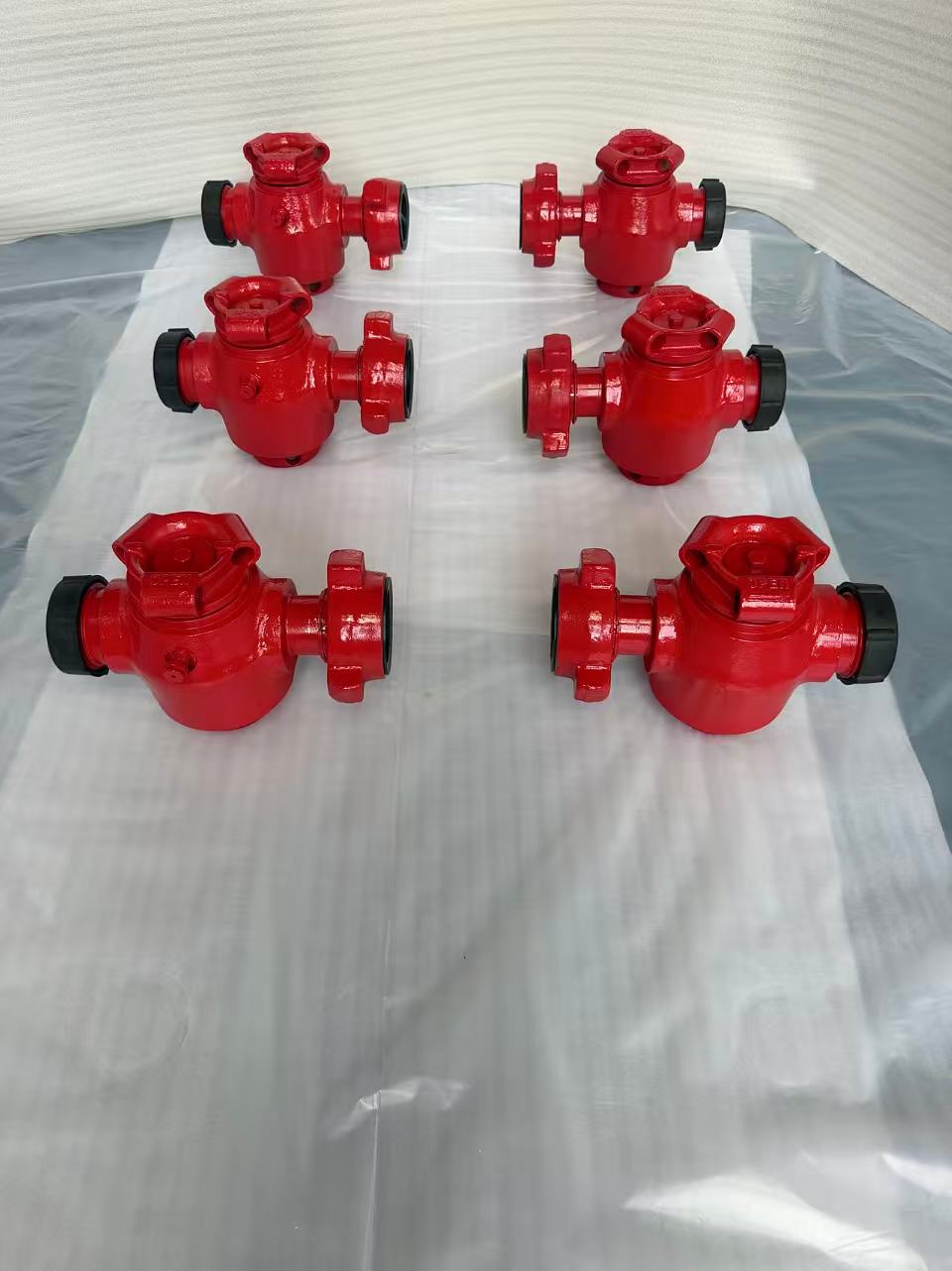
The cost of flow iron is driven less by any single piece than by the whole package: the size and pressure rating, the material and build, the quantity and mix, how soon it is needed, and what documentation and support come with it. A quote that looks cheap on one line can cost more once freight, testing records, spares, and replacement are counted — so buyers compare the delivered, tested, job-ready package, not the unit price alone. The most useful question is not what a piece costs, but what the order has to include for the iron to be on the line, tested, and on time.
Size, rating, and material: the iron itself
The first cost driver is the iron itself: its size, its pressure rating, and how it is built. Two-inch FIG 1502 iron rated to 10,000 PSI is the size most frac and well-service spreads are built around, and it is also the size most widely stocked — which is part of why it is the practical default. Larger bores use more steel per foot, weigh more, and need larger fittings at every joint, so the cost of the line grows across the whole package, not just the straight runs.
The rating matters the same way. Iron built for high-pressure treating service is built heavier, with thicker walls, stronger unions, and sealing surfaces machined to hold under pressure — and that build is what the rating pays for. Material and build quality also decide how long a piece lasts in service: iron that holds its seal, turns smoothly, and passes its next pressure test is iron that does not need replacing early, and the cheapest piece to buy is rarely the cheapest piece to own.
Quantity and mix: a line is a package, not a piece
No one buys a single piece of flow iron and puts it to work. A treating line is a package — straight runs, pup joints in 4, 6, and 10 ft to close the measured gaps, plug valves to isolate sections, and swivel joints to take the bends — and the cost of the job is the cost of the whole package. Ordering the full set together, matched in size and union figure, is usually simpler and safer than assembling it piece by piece from different sources: every make-up matches, every rating is the same, and nothing waits on an adapter that was not on the order.
Quantity changes the picture too. A single spare valve ordered on its own carries the same handling, testing, and freight as a valve ordered with a full line — spread across one piece instead of many. That is why buyers who plan a job's full line list, spares included, get a clearer view of the cost than buyers who price one piece at a time and add the rest later. Spares deserve a line of their own in the plan: a spare plug valve and a spare swivel on the truck cost far less than a spread waiting while a replacement is shipped.
Lead time and availability: the cost of waiting
The third driver is time. Iron that is in stock in Texas, tested and ready to ship, can be on a truck the day the order is placed; iron that has to be made, gathered from several yards, or tested before it ships takes longer — and a spread that is ready to work but waiting on iron is the most expensive kind of waiting there is. Lead time stretches when demand is high, which is why orders placed before the busy season usually arrive on schedule, and orders placed at the peak compete with every other crew for the same pieces.
Availability is not only about the pieces on the shelf. It is about the right pieces: the right lengths, the right union figures, the right swivel styles, with current test records. A yard full of iron in the wrong figure does a buyer no good. When you ask a supplier about availability, ask about the configuration you need, by drawing number, and about the required-on-site date — a firm date lets the supplier plan the shipment, and a vague one leaves the order at the back of the queue.
What comes with the iron
- Pressure test records: ask for the test record with the quote — the piece, the test pressure, the hold time, and the date, tied to the piece by drawing number. A record is part of what you are buying; iron without one has to be tested before it goes into service, and that time belongs in the plan.
- Configuration confirmed by drawing number: a quote that names the pieces — T000856 plug valve, T000864, T000866, and T000855 pup joints, T000620 and T000693 swivels — is a quote you can check against the line list. A quote that does not name them is a quote you have to guess at.
- Freight and delivery: the cost of getting iron to the site is part of the cost of the iron. Ask whether the quote covers delivery to the location, and how the iron is protected in transit — caps on the union ends, pieces secured so they cannot shift — because a damaged sealing surface on arrival is a replacement, not a delivery.
- Service and spares after the sale: ask what happens if a piece arrives damaged or a swivel starts to weep — who to call, how fast a replacement moves, and whether spares are in stock. A supplier who stocks the pieces can answer that question; a supplier who does not is quoting a price, not a service.
- The total, not the unit: compare quotes on the delivered, tested, job-ready package — iron, records, freight, and spares — not on a single line item. Two quotes for the same pieces can differ widely once those parts are counted, and the lower unit price is not always the lower total.
Where Sterling can help
Sterling Wellhead stocks new 2-inch FIG 1502, 10,000 PSI flow iron in Jourdanton, Texas 78026, including the T000856 plug valve, 4 ft, 6 ft, and 10 ft pup joints (T000864, T000866, T000855), and Style 10 and Style 50 swivel joints (T000620, T000693). Send the line list, the quantities and drawing numbers, the delivery location, and the required-on-site date, and ask for the pressure test documentation with your RFQ — our team will confirm the configuration by drawing number. Sterling is RFQ-only: contact sales@sterlingwellhead.com or +1 (512) 373-0384.
Frequently asked questions
Why do quotes for the same size of iron differ?+
Because a quote is more than the iron: it covers the build and rating, the quantity and mix, the test records, the freight, and the support behind it. Two suppliers can quote the same nominal size and deliver very different packages — one with current test records and matched pieces, one without. Ask what is included in each quote, and compare the delivered, tested, job-ready package rather than a single line item.
Is it cheaper to buy flow iron piece by piece?+
Usually not. A single piece ordered on its own carries the same handling, testing, and freight as a piece ordered with a full line, and a line assembled from different sources risks mismatched figures and ratings. Ordering the complete line — straight runs, pup joints, valves, and swivels, plus spares — matched in size and figure, is simpler to check, faster to rig up, and easier to compare on total cost.
What should I send with an RFQ to get a useful quote?+
Send the line list with quantities and drawing numbers, the size and union figure, the delivery location, and the required-on-site date, and ask for the pressure test documentation with the quote. With that, a supplier can confirm the configuration, check stock and test records against your dates, and quote the delivered package instead of guessing at the pieces.